


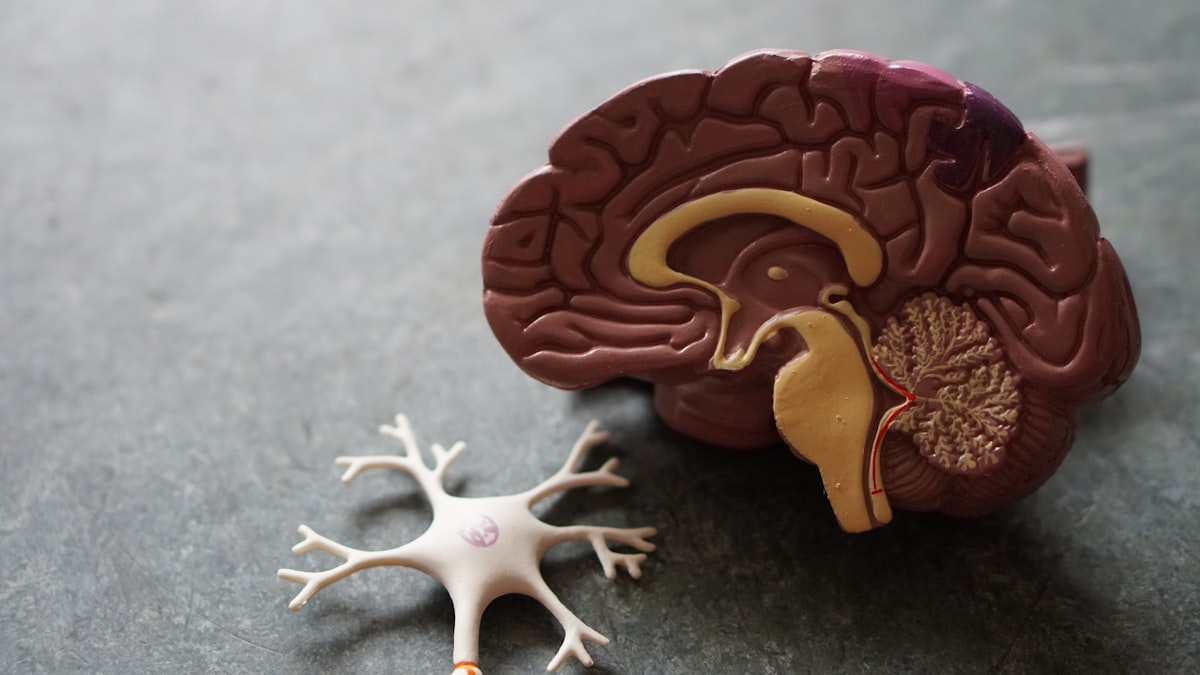
You know that voice inside your head that whispers “you’re not good enough”? The one that shows up right when you need to speak up, take a risk, or believe in yourself?
Here’s what most people don’t realize: that voice isn’t just psychology. It’s biology.
Your beliefs about your own worth are physically wired into your brain’s architecture. And the really extraordinary part? You can rewire them.
Let’s talk about what’s actually happening in your brain when you don’t feel “enough” – and how changing one thing about the way you talk to yourself can literally change your brain.
Three Parts of Your Brain That Keep You Stuck (and How to Set Them Free)
Think of your brain as having three main players in the self-worth game.
First is your Default Mode Network – the part of your brain that lights up when you’re not doing anything in particular. Daydreaming. Reflecting. Thinking about yourself. When you have low self-worth, this network goes into overdrive. It gets stuck in a loop of self-criticism, comparison, and rumination. “What’s wrong with me? Why can’t I be like them? I’m not enough.” It’s exhausting, it spikes your cortisol, and it keeps your body in a low-grade state of threat – even when nothing’s actually wrong.
The good news? Studies on self-compassion show that when you start talking to yourself with kindness, this network calms down. The same brain regions that lit up with criticism start showing patterns of safety and warmth. You’re literally quieting the noise, one kind thought at a time.
Second is your amygdala – your brain’s alarm system. Evolution designed it to detect physical danger, but it can’t tell the difference between a tiger and a critical boss. When you believe you’re not enough, your amygdala stays on high alert, constantly scanning for rejection or judgment. It makes you interpret neutral feedback as criticism. It makes you feel unsafe in situations that are perfectly safe.
But here’s the beautiful part: every time you practice self-acceptance – every time you say “I am enough” and genuinely mean it – you’re training your amygdala to calm down. fMRI studies show that people who practice self-compassion have measurably lower amygdala reactivity to social threats. Their brains simply don’t sound the alarm as loudly anymore.
And third is your prefrontal cortex – the CEO of your brain. This is where conscious change happens. When you deliberately choose to think “I am enough,” you’re using your prefrontal cortex to send a message to the rest of your brain: “This thought is safe. No threat needed here.”
Repeat it enough, and that pathway becomes automatic. The conscious choice becomes effortless. That’s how a practiced belief becomes a wired-in one.
Neuroplasticity: The Science That Changes Everything
Here’s the most empowering discovery in modern neuroscience: your brain can rewire itself throughout your entire life. We used to think the brain was fixed after childhood. We were wrong.
Every time you have a thought, neurons fire together. Repeat that thought enough, and those connections grow stronger. Neurons that fire together, wire together.
This means if you’ve spent twenty years believing “I’m not good enough,” that belief is physically encoded in your neural pathways. But here’s the thing: it’s not permanent. Every time you choose a different thought, you build a new pathway. And with consistent practice, that new pathway becomes the default one.
Your subconscious mind – the part that runs on autopilot – doesn’t distinguish between “real” and “imagined.” It just responds to repetition. That’s why consistently reinforcing “I am enough” is so powerful. It moves from conscious effort into subconscious programming, until believing in yourself becomes as automatic as breathing.
Five Practices That Actually Rewire Your Brain
Let’s get practical. Here’s what works, backed by the science:
Affirmations with feeling. Just repeating words does almost nothing. But say “I am enough” while placing your hand on your heart, breathing deep, genuinely feeling it – and you activate multiple brain regions at once. The emotion is what locks it in.
Mindfulness meditation. Ten minutes a day reduces DMN hyperactivity, calms your amygdala, and literally increases the thickness of your prefrontal cortex. It creates the neurological conditions for new beliefs to take root.
Cognitive reframing. Catch yourself thinking “I’m not good enough” and reframe it. “I’m learning and growing.” Each reframe is a neural workout – strengthening the new pathway, weakening the old one.
Visualization. Your brain can’t tell the difference between a vividly imagined experience and a real one. Visualize yourself as inherently worthy, moving through life with confidence. Your brain builds the same neural networks as if you were actually living it.
Consistency. One dose of “I am enough” won’t undo decades of conditioning. But five minutes a day, every day, creates cumulative change. Give it 60 to 90 days and you’ll feel the shift.
The ‘I Am Enough’ Method
Having the science is one thing. Having a structured framework to apply it is another. That’s exactly what the I Am Enough Method was built for – a systematic approach that targets every part of the brain we’ve talked about, from conscious thought all the way down to subconscious programming. It takes the five practices above and weaves them into a daily routine that actually sticks. If you’re ready to stop just knowing the science and start living it, the I Am Enough Method hub has everything you need to get started.
Frequently Asked Questions
Can neuroscience really prove self-worth beliefs?
Yes. fMRI studies show that your beliefs about your worth correlate with measurable brain activity in the default mode network, amygdala, and prefrontal cortex. When you change your beliefs, your brain’s activity patterns change too.
How long does it take to rewire self-worth beliefs?
Most people notice shifts within 2-3 weeks of daily practice. Significant rewiring typically takes 60-90 days of consistent reinforcement. Think of it like building a muscle – you wouldn’t expect a six-pack after one workout.
Is the “I Am Enough” method backed by science?
Absolutely. The I Am Enough Method combines multiple neuroscience-backed practices – affirmations with emotional engagement, mindfulness, cognitive reframing, and visualization – each with independent research supporting its effect on brain structure and function.
Can hypnosis help rewire self-worth beliefs?
Yes. Hypnosis accesses the subconscious mind directly, where deep-seated beliefs live. RTT (Rapid Transformational Therapy) is particularly effective because it combines hypnosis with psychotherapeutic techniques to identify and reframe the root causes of low self-worth.
Disclaimer: This article is for informational purposes only and does not constitute medical advice. Always consult a qualified healthcare provider.
Final Thoughts
Your beliefs about your own worth aren’t just nice ideas or abstract concepts. They’re physical structures in your brain. And thanks to neuroplasticity, those structures can change.
“I am enough” isn’t something you have to fake or force. It’s something you can build – neuron by neuron, thought by thought, day by day.
Your brain is wired for growth. It’s wired for connection. And it’s wired to learn, even the most fundamental truths about who you are.
You are enough. And now you know exactly how your brain can learn to believe it.